
April is Heartworm Awareness Month: Is Your Pet Protected?
April is National Heartworm Awareness Month, and it’s the perfect time to learn what heartworm disease is and why prevention is so important for your pet’s health.
What is Heartworm?
Heartworm disease is a serious and potentially fatal condition that affects both dogs and cats. It’s caused by parasitic worms (Dirofilaria immitis) that live in the heart, lungs, and blood vessels of infected animals.
Adult heartworms can grow up to 12 inches long and live for 5–7 years. Over time, they cause severe damage to the heart and lungs, leading to lasting health issues, and can even be fatal if left untreated.
How Do Pets Get Heartworm?
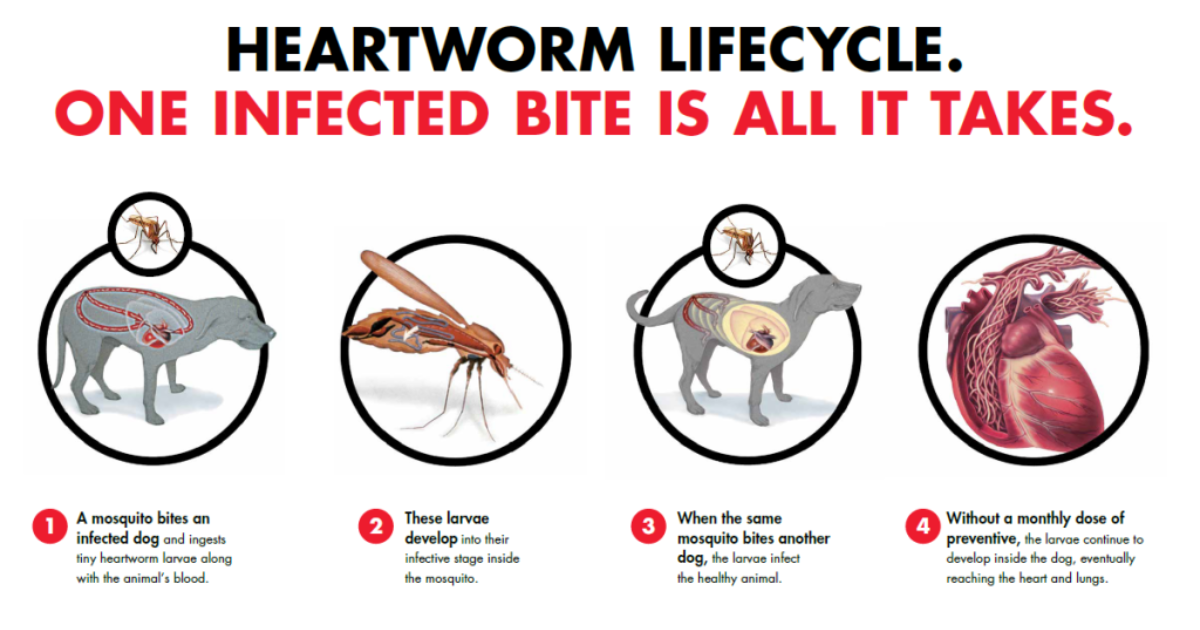
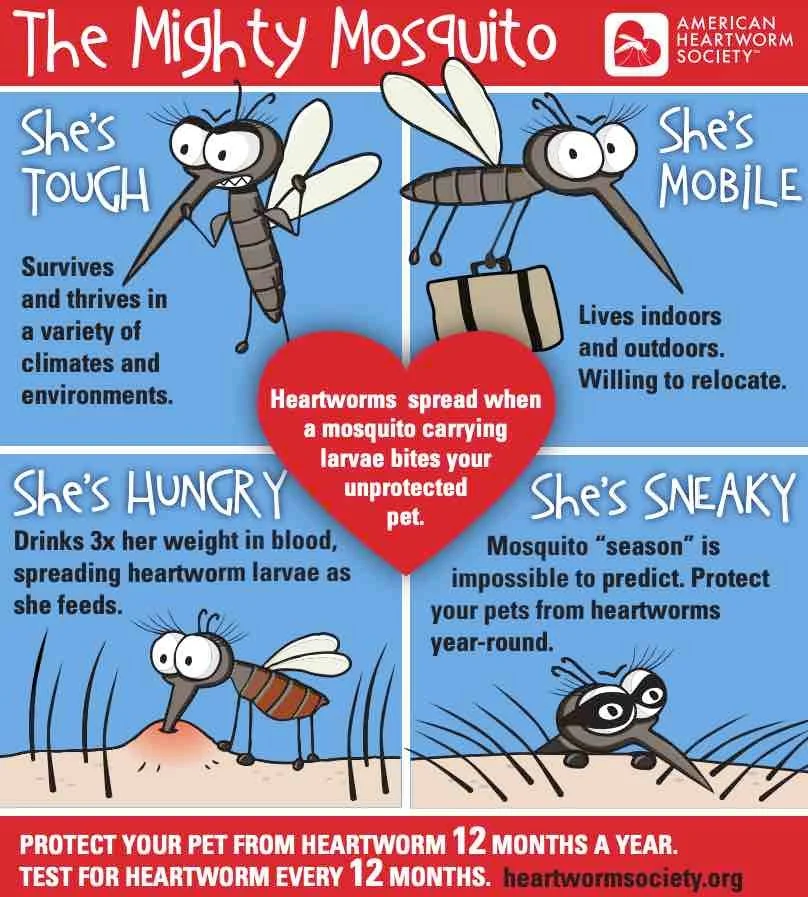
Heartworm is spread through mosquito bites. When a mosquito bites an infected animal, it picks up microscopic larvae. These larvae are then transmitted to the next animal the mosquito bites.
Dogs are the most common hosts, but cats can also become infected.
It’s important to note: mosquitoes can remain active even in colder temperatures, meaning heartworm is a year-round risk. Once inside the body, larvae take about 4–5 months to mature into adult worms.
Signs of Heartworm in Dogs
In the early stages, heartworm disease often shows little to no symptoms. As the disease progresses, you may notice:
Persistent coughing
Fatigue after mild activity
Lethargy
Decreased interest in exercise or play
Reduced appetite and weight loss
In advanced cases, dogs may develop heart failure, leading to a swollen abdomen due to fluid buildup.
Signs of Heartworm in Cats
While less common, heartworm disease in cats can be just as serious. It often presents as Heartworm-Associated Respiratory Disease (HARD), with symptoms such as:
Asthma-like attacks
Vomiting
Loss of appetite
Difficulty walking
Seizures
Fluid accumulation
Unlike dogs, there is no approved treatment to eliminate heartworms in cats, making prevention absolutely critical.
Testing for Heartworm
Heartworm is diagnosed through a simple blood test performed by your veterinarian.
Dogs should begin testing as puppies and be tested annually
Regular testing ensures early detection and better outcomes
Prevention is Key
The good news: heartworm disease is preventable! Prevention is key when it comes to keeping our furry family members healthy, happy, and heartworm-free.
Preventatives are safe, affordable, and easy to administer. Heartworm preventatives are available ONLY by a prescription from your veterinarian. Options include:
Monthly chewable tablets
Topical “spot-on” treatments
Some products also protect against additional parasites like fleas, ticks, and intestinal worms.
If a pet becomes infected, treatment, especially for dogs, can be expensive, lengthy, and requires strict activity restriction. Prevention is always the easier and safer choice!
Your veterinarian can help you choose the best product based on your pet’s needs and local parasite risks.
Protect Your Pet Today
Keeping your pet on year-round heartworm prevention is one of the simplest ways to safeguard their health.
Call the HART Animal Center at 301.387.7729 to schedule an appointment and make sure your furry family member stays protected, not just this April, but all year long!